AI-Integrated Multilingual Content Production Platform
AI • Language Technology • Media Automation • Education
An end-to-end platform that transforms text, audio recordings, and YouTube media into structured bilingual lesson packages through automated transcription, segmentation, translation, voice synthesis, audio processing, and cloud deployment.
Built around an orchestration architecture integrating specialized AI services into a single automated production workflow.
 Java
Java
 Angular
 MySQL
MySQL
 AWS
AWS
 OpenNLP
yt-dlp
ffmpeg
Full-Text Search
OpenNLP
yt-dlp
ffmpeg
Full-Text Search
 gRPC
gRPC
- One-Click PipelinesFrom source media to a deployable multilingual lesson package
- Multimodal InputText documents, audio recordings, CDs, DVDs, and YouTube media
- Reusable ContentSearchable multilingual segments reused across lessons
- Cloud DeliveryAWS-hosted processing, storage, packaging, and deployment
From Raw Media to Production-Ready Lessons
The platform turns heterogeneous input sources into standardized multilingual lesson content. Each workflow is composed of reusable processing stages that can be configured according to the source type and required output. A workflow selects only the applicable stages; not every source passes through every possible operation.
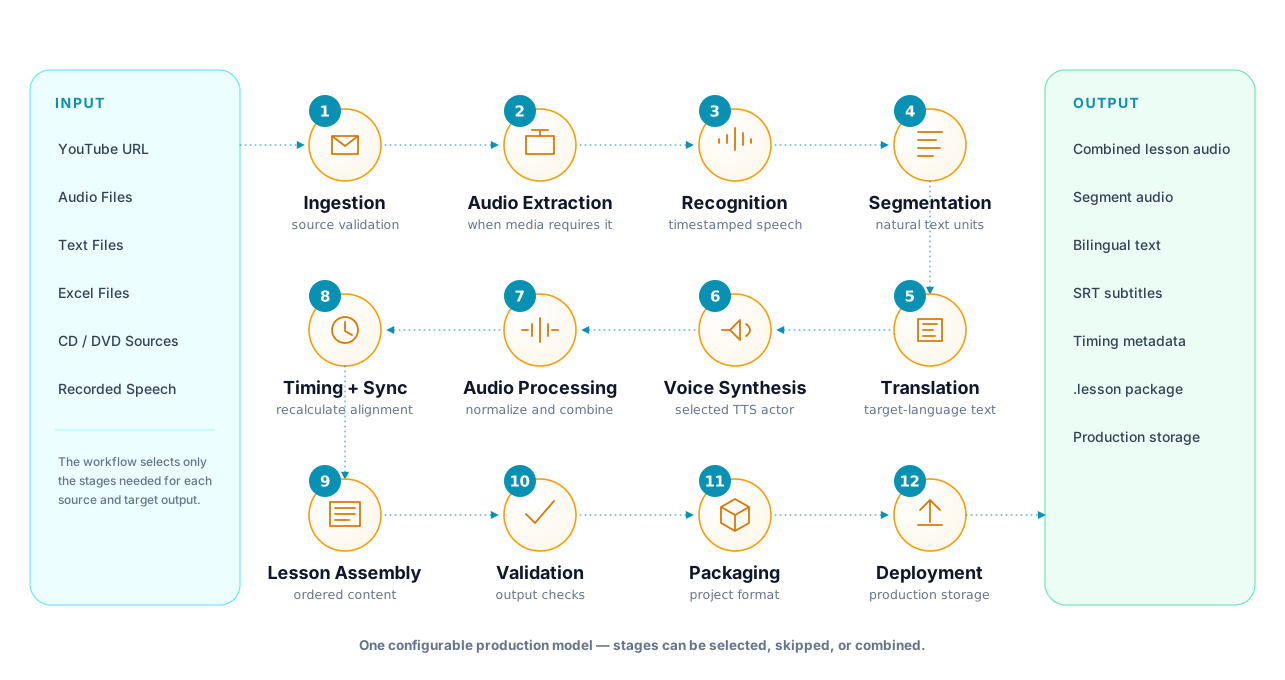
From a single YouTube URL or source file to a production-ready multilingual lesson package with one click.
Overview
A Production Platform for Multilingual Learning Content
The platform was designed to automate the creation of high-quality multilingual educational media for language schools and individual learners. It processes raw text, recorded speech, and online video sources and converts them into reusable bilingual content.
Its responsibilities extend beyond translation. The platform orchestrates speech recognition, natural-language segmentation, machine translation, text-to-speech generation, audio extraction, timing recalculation, audio normalization, subtitle generation, lesson assembly, packaging, storage, and production deployment.
The result is a repeatable content-production process that replaces a large amount of manual transcription, translation, recording, editing, synchronization, and file preparation.
Automated Content Production
Configurable pipelines turn varied source materials into consistent lesson outputs.
AI Service Orchestration
Speech recognition, translation, and voice synthesis work as coordinated processing stages.
Reusable Multilingual Data
Persistent text, audio, and timing records support search and cross-lesson reuse.
Production-Ready Lesson Packaging
Validated lesson files and linked media assets are assembled for deployment.
System Design
Platform Architecture
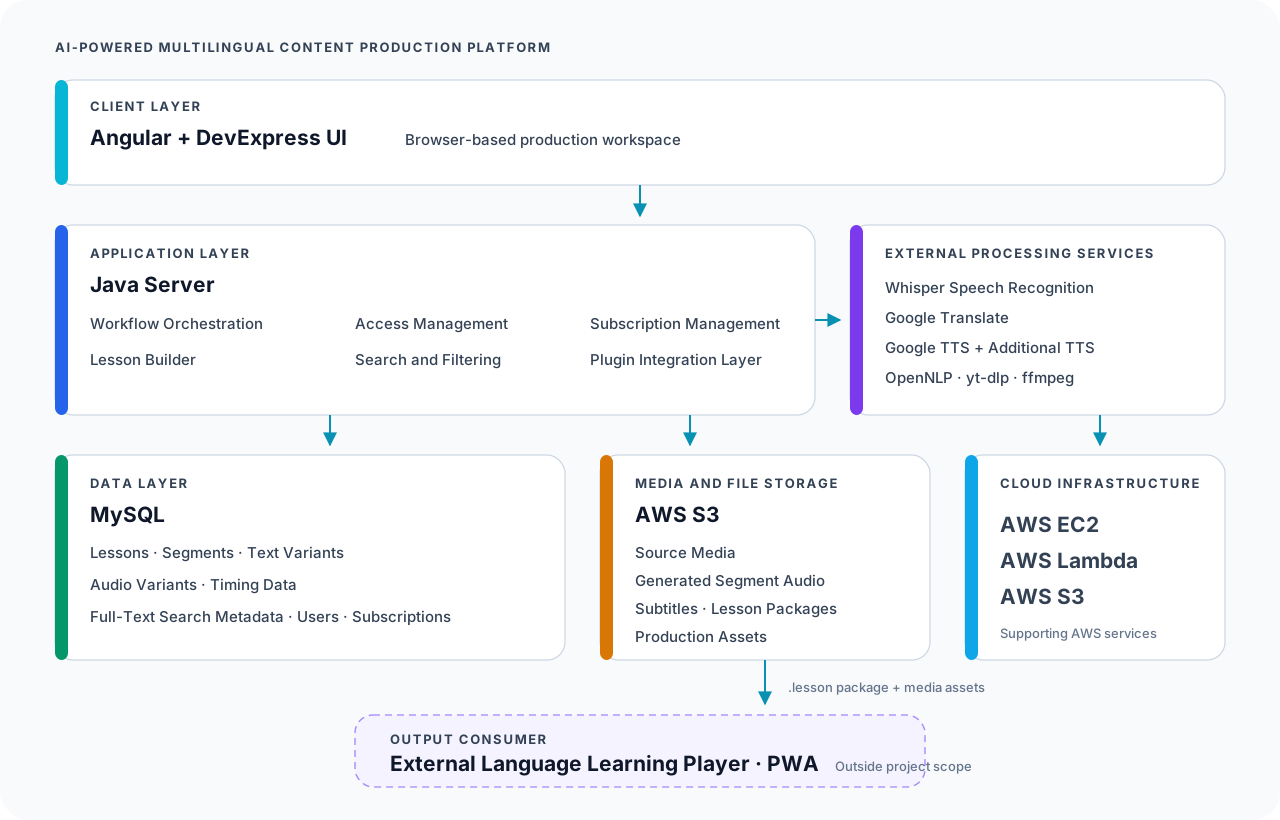
A layered Java-based platform connects the Angular client, processing services, multilingual database, AWS infrastructure, and external AI providers through a configurable plugin-oriented architecture. The platform includes access-management functionality supporting free and paid subscription models.
Content Architecture
Lessons Built from Reusable Multilingual Segments
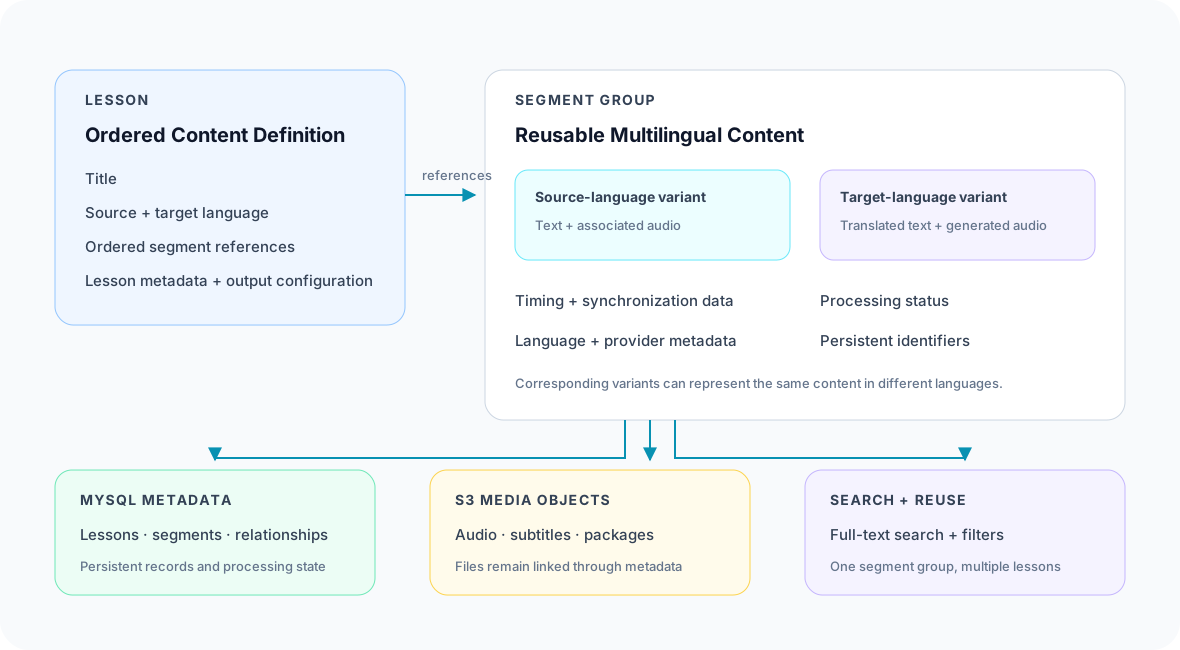
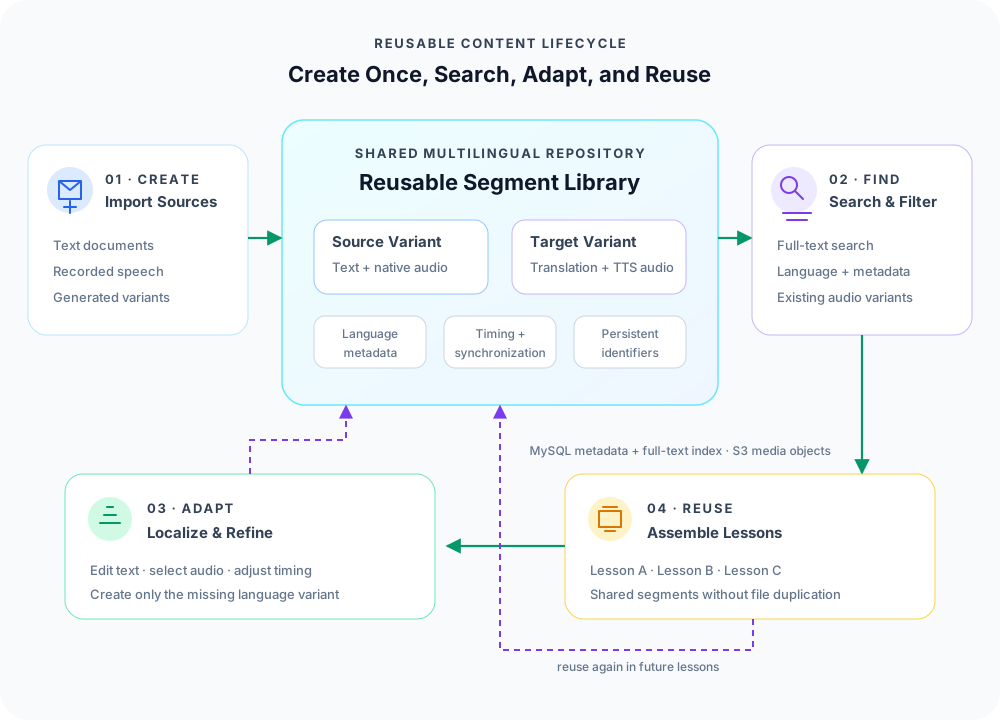
A segment stores text and associated audio in a specific language, while corresponding variants can represent the same content in other languages. A production lesson selects two languages and references an ordered set of hundreds of segment groups rather than requiring every media file to be duplicated.
When segments originate from audio, their records can include timing and synchronization data. Producers use filters and full-text search to find existing material and reuse it in new lessons. Lesson definitions and generated files are stored separately, with persistent metadata linking reusable records to media objects while leaving room for implementation-specific storage choices.
Processing Capabilities
A Modular AI and Media Processing Toolkit
Speech Recognition
Whisper-based transcription converts native-voice recordings into timestamped text for later segmentation and translation.
Natural-Language Segmentation
OpenNLP divides long texts into natural, reusable learning segments while preserving sentence boundaries and linguistic structure.
Machine Translation
Google Translate and configurable external services generate target-language text that can be reviewed, edited, stored, and reused.
Voice Synthesis
Google TTS and additional providers generate audio using selectable voices, referred to inside the platform as actors.
YouTube Ingestion
A yt-dlp-based module retrieves source media and extracts the required audio streams from supported YouTube content.
Audio Processing
ffmpeg converts formats, extracts channels, trims audio, recalculates timing, normalizes files, inserts pauses, and combines final lesson audio.
Subtitle Generation
Segment text and timing data are converted into synchronized SRT subtitle files.
Lesson Assembly
The builder combines ordered source audio, configurable pauses, target audio, text, subtitles, metadata, and output settings.
Search and Reuse
Filters and full-text search locate existing segments and lesson content for reuse in future productions.
Cloud Deployment
Completed packages and associated assets are published to production storage for consumption by downstream applications.
Content Repository
Create Once, Search, Adapt, and Reuse
The database is not merely a collection of generated files. It is a structured multilingual repository designed to preserve and reuse content across many lessons.
Producers can search existing segment text, filter by language and other available metadata, select previously generated audio variants, and assemble new lessons without recreating every component.
This approach reduces duplicate translation and voice-generation work while helping maintain consistency across a growing lesson library.
- Multilingual Segment Library
- Full-Text Search
- Configurable Filters
- Audio and Text Variants
- Cross-Lesson Reuse
- Persistent Timing Metadata
Workflow Examples
Multiple Inputs, One Consistent Production Model
Text to Bilingual Lesson
A producer uploads source-language text through the Angular web client. The platform divides it into natural segments, translates the segments, generates voice audio, builds synchronized output files, and deploys the finished lesson package.
- TXT or XLS upload
- OpenNLP segmentation
- Google Translate
- Selected TTS actor
- Source and target audio generation
- Pause insertion
- Lesson audio compilation
- SRT generation
.lessonpackaging- Production deployment
Recorded Voice to Structured Lesson
Audio from a CD, DVD, recording, or other source is transcribed and divided into synchronized text and audio segments. The translated and synthesized variants are stored as reusable content before lesson production.
- Native voice recording
- Whisper transcription
- Timestamped text
- Text and audio segmentation
- Timing recalculation
- Translation
- Target-language TTS
- Database storage
- Lesson assembly
- Deployment
YouTube URL to Finished Lesson
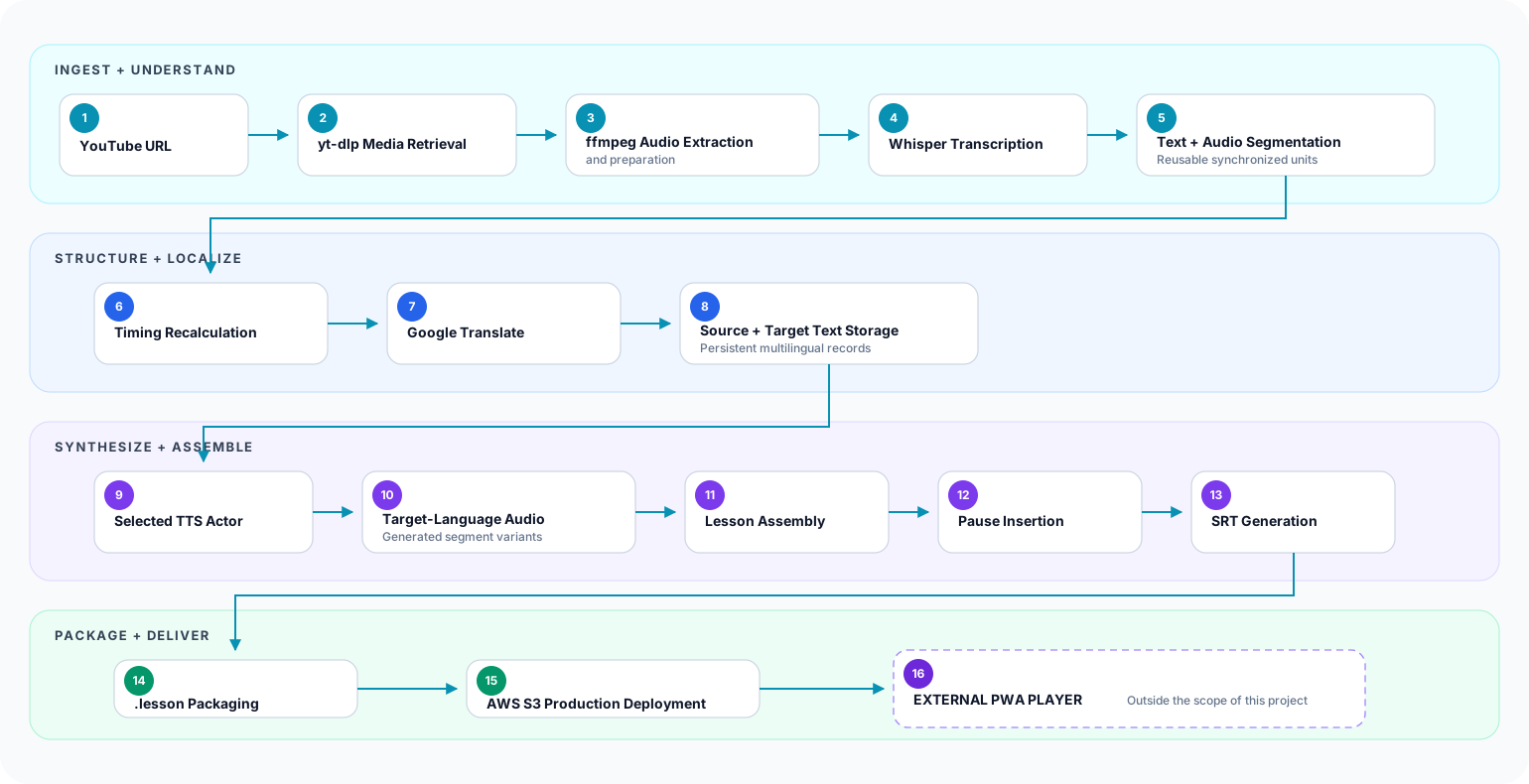
A supported YouTube URL initiates the complete automated pipeline. Audio is extracted, transcribed, segmented, translated, voiced, synchronized, assembled, packaged, and prepared for production delivery.
- YouTube URL
- yt-dlp
- ffmpeg
- Whisper
- Segmentation
- Translation
- TTS
- Synchronization
- Lesson builder
- Packaging
- Deployment
End-to-End Automation
From YouTube URL to Finished Lesson
The complete media workflow connects retrieval and audio preparation with transcription, synchronized segmentation, translation, voice synthesis, lesson assembly, subtitle generation, project-specific packaging, and cloud deployment.
Cloud Platform
AWS-Based Processing, Storage, and Delivery
The production platform is hosted on AWS and separates application execution, persistent business data, media storage, and auxiliary processing responsibilities.
AWS EC2
Hosts the Java server and principal platform services.
AWS S3
Stores source media, generated segment audio, subtitles, lesson packages, and production assets.
AWS Lambda
Supports selected background or auxiliary cloud-processing tasks.
MySQL
Stores lessons, segment metadata, multilingual text, processing state, access data, subscriptions, and references to media objects.
The architecture also uses supporting AWS services where required by deployment and processing workflows.
Production Output
Structured Packages for Language-Learning Playback
Language direction is configurable. The lesson builder sequences selected source- and target-language variants with timing, pause, subtitle, and output settings, then produces a project-specific .lesson package and its associated assets.
- Combined lesson audio
- Individual segment audio
- Source and target texts
- SRT subtitle files
- Timing and synchronization data
- Lesson metadata
.lessonpackage- Production storage assets
System Boundary
Built for a Dedicated Language Learning Player
The generated lesson packages are consumed by a separate Progressive Web Application designed specifically for language learners. The player presents synchronized multilingual text and audio and provides the learner-facing playback experience.
.lesson package and media assetsExternal Language Learning PlayerThe Language Learning Player was developed independently by another developer and is outside the scope of my work on the LTA content production platform.
Technology Stack
Technologies Behind the Platform
FRONTEND
Angular DevExpress
BACKEND
JavaPlugin-oriented service integrationsDATA
MySQLFull-text searchAWS S3 object storageAI AND LANGUAGE SERVICES
OpenNLPMEDIA PROCESSING
CLOUD
AWS EC2AWS S3AWS LambdaSupporting AWS servicesMy Contribution
My Role
I designed and developed the LTA platform as an end-to-end content production system, covering product architecture, full-stack implementation, AI integrations, multimedia workflows, data modeling, cloud infrastructure, and automated deployment.
- Product architecture and technical design
- Angular and DevExpress web-client development
- Java server development
- MySQL schema and multilingual content-model design
- Workflow orchestration and automation
- Whisper speech-recognition integration
- Google Translate integration
- Google TTS and additional voice-provider integrations
- OpenNLP segmentation integration
- yt-dlp-based media ingestion
- ffmpeg-based audio processing
- Segment timing and synchronization workflows
- Lesson builder and
.lessonpackage generation - Full-text search and reusable-content functionality
- AWS EC2, S3, and Lambda integration
- Access and subscription management
- Production deployment and maintenance